
Martyn’s Law
The Terrorism (Protection of Premises) Act 2025, also known as Martyn’s Law, received Royal Assent on Thursday 3 April 2025.
This Act delivers the Government’s manifesto commitment to strengthen the security of public premises and events.
What does Martyn’s Law do?
The Terrorism (Protection of Premises) Act 2025, also commonly referred to as Martyn’s Law, will improve protective security and organisational preparedness across the UK by requiring that those responsible for certain premises and events consider how they would respond to a terrorist attack. In addition to this, at certain larger premises and events, appropriate steps to reduce vulnerability to terrorist attacks must also be considered. Through the Act, qualifying premises and events should be better prepared and protected, ready to respond in the event of a terrorist attack.
Whilst those that fall within scope of the Act may wish to begin considering the requirements, they should note that guidance will be published in due course. This guidance will assist in understanding the requirements set out in the legislation. The guidance is being designed to be easy to follow, needing neither particular expertise nor the use of third-party products or services.
To support enforcement of the regime, a regulator will be established through a new function of the Security Industry Authority (SIA), which will support, advise and guide those responsible for premises and events in meeting the requirements of this legislation.
How will it work?
The Act establishes a tiered approach, linked to the number of individuals it is reasonable to expect may be present at the same time at premises and events.
Who will be in scope?
Premises that satisfy the following four criteria fall within scope of the Act:
- There is at least one building (or the premises are in a building);
- The premises are wholly or mainly used for one or more of the uses specified at Schedule 1 to the Act, e.g. a restaurant or a shop;
- It is reasonable to expect that at least 200 individuals may be present at least occasionally; and
- The premises are not excluded under Schedule 2 to the Act
If 800 or more individuals may be expected, the premises will be an enhanced duty premises unless the Act says otherwise.
An event that satisfies the following criteria fall within scope of the Act:
- It will take place at premises within section 3(1)(a) of the Act, including land without buildings, that are not enhanced duty premises (or part of enhanced duty premises);
- The relevant premises are accessible to members of the public for the purpose of the event;
- It is reasonable to expect that there will be at least 800 individuals present for the event at once at some point during it;
- There will be measures to check entry conditions are met, such as a ticket checks; and
- The event is not excluded under Schedule 2 to the Act.

What are the requirements for enhanced duty premises and qualifying events?
Enhanced duty premises and qualifying events are premises or events where it is reasonable to expect that 800 or more individuals (including staff numbers) may be present on the premises at least occasionally or attend the event at the same time. In addition to the same requirements as standard duty premises (above), the person responsible for enhanced duty premises and qualifying events will additionally be required to:
- have in place, so far as reasonably practicable, appropriate public protection measures that could be expected to reduce both (i) the vulnerability of the premises or event to an act of terrorism, and (ii) the risk of physical harm being caused to individuals if an attack was to occur there or nearby. For example, enhanced duty premises will be required, so far as is reasonably practicable, to implement measures relating to the monitoring of the premises and their immediate vicinity;
- document the public protection procedures and measures in place, or proposed to be put in place, and provide this document to the SIA. This document should include an assessment of how the public protection procedures and measures reduce vulnerability and/or the risk of harm; and
- Where the responsible person is not an individual, they must designate a senior individual with responsibility for ensuring that the responsible person complies with these requirements
Will Martyn’s Law apply to all of the UK?
The legislation will apply across England, Wales, Scotland and Northern Ireland to ensure consistency in keeping the public safe across all parts of the United Kingdom.
 How can Auto Mate Systems Ltd. assist with the implementation of public protection measures?
If you are looking to enhance and/or implement your public protection measures, perimeter security and general access control to your site, we can certainly help in a variety of ways. As per the bill requirements, the measures that are put in place must be tailored to the particular premises in question. It would be ideal to form an accurate understanding of how to ultimately reduce the vulnerabilities in order to mitigate the impact of a terrorist attack, should one occur.
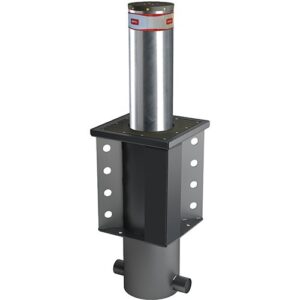
We, at Auto Mate, can work together using our physical safety and security measure expertise, to form a clearer picture of equipment and solutions that would provide improved mitigation. Automatic Barriers, Automatic Bollards, Gates and Road Blockers are just a handful of measures that we could assist with…
(all information above is taken from the Gov.UK website via the following link; https://homeofficemedia.blog.gov.uk/2025/04/03/martyns-law-factsheet/)